

Colorado's Abandoned Towns Eureka - First Gold Discovery in the San Juans

Updated: Oct 27
Site Visit Date: September 4, 2026
Colorado's Abandoned Towns -- Better Known as Ghost Towns.
Today's Town: Eureka
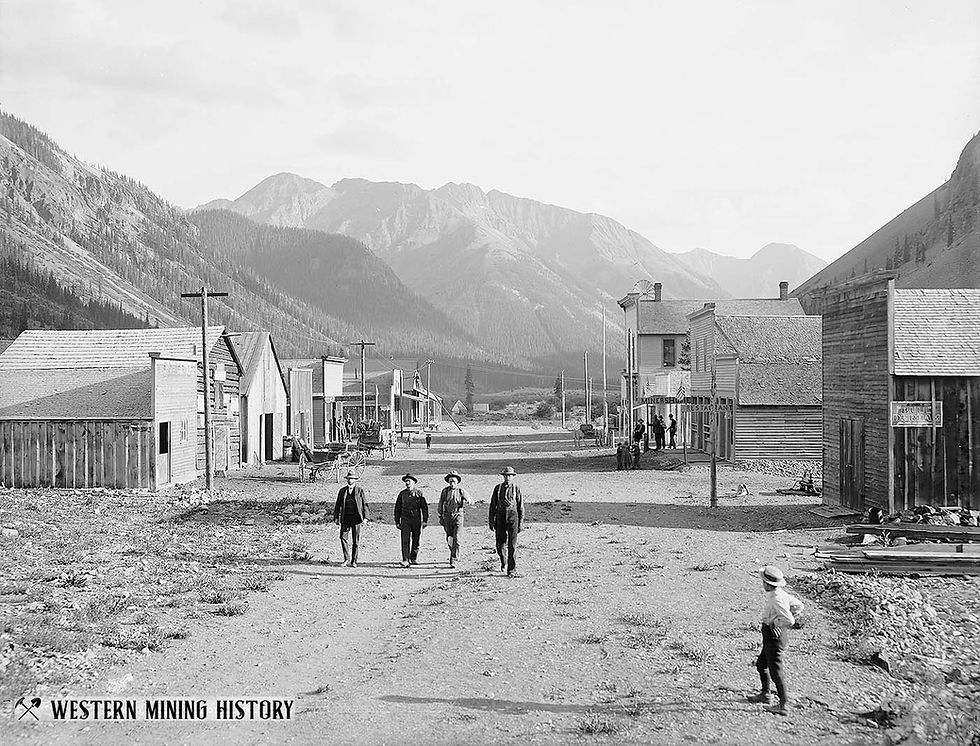
Eureka. The name itself means, “I found it.” And in the early 1860s, that is exactly what prospectors did here. They found gold.
But, what they found wasn’t enough to immediately create the Eureka visitors later knew.
The first prospectors came.
They searched.
They left.
The substantial mining town came later.
Today, more than 160 years afterward, people are still coming to Eureka looking for something—although now it may be mountain scenery, history, camping, off-road adventure, or simply a place to spend a few days in the San Juans.
Once again, my husband, our dog, Harley, and I are jumping into our Jeep and climbing high into the San Juan mountains looking for Eureka, a former mining town and to answer this town’s guiding question:
What does it mean to be first if the real story comes years later?
HISTORY OF EUREKA
THE FIRST DISCOVERY – Early 1860s
Eureka, Colorado in San Juan County sits at roughly 9,862 feet above sea level.
In 1860, Charles Baker, led a prospecting party into the upper Animas country, where reports of placer gold helped launch the San Jauns’ first mining rush. By the spring of 1861, prospectors were working Eureka Gulch near the site of present-day Eureka.
Whether anyone actually shouted the famous word is harder to prove, but the name could hardly have been more appropriate. Eureka means “I have found it.”
The discovery was important historically.
Economically?
Not so much.
The placers proved disappointing.
One historic account describes Eureka as the oldest of the San Juan mining camps, beginning with Baker’s exploration in 1860.
A federal history of southwestern Colorado explains that Baker’s reports drew hundreds of hopeful prospectors into the upper Animas region, but the placer workings did not produce satisfactory returns. By 1861, much of that first rush had dissipated.
They had found gold.
But this would not be Eureka’s future. Yet.
Finding gold was only the beginning.
The San Juans presented enormous obstacles:
· High elevation
· Severe winters
· Difficult mountain terrain
· Almost nonexistent transportation
· Distance from supplies and ore-processing facilities
· Mining activity occurring on Ute lands before later treaties opened much of the region to legal settlement.
The early placer deposits also simply weren’t rich enough to sustain the rush.
While the men had found gold, the conditions necessary to build a permanent mining economy were not there.
It wasn’t until 1873, when the Sunnyside lode was located nearby, that Eureka’s next chapter began. Primary minerals mined were gold and silver, with lead and zinc also important to later mining. The Sunnyside became Eureka’s dominant mine and eventually one of the most important mining operations in the Silverton district.
By 1875, a post office was established. While there is no census documentation to support the population numbers, it’s been reported that during the boom years, there may have been roughly 2,000 people who lived and worked here.
Eureka had been discovered once. Now it had to be discovered all over again.
The first generation had looked for loose gold in streams and gravel.
The next generation learned to extract wealth from the mountains themselves.
ACCESS
For years, Eureka remained remarkably isolated.
Trails provided the primary access.
Supplies had to be carried through rugged mountain terrain, and moving ore out was expensive.
First Generation:
On foot, horseback, and pack animal.
They were willing to endure the journey because they hoped to find gold.
Improved Road Access:
By the mid-1880s, improved toll-road access connected Howardsville, Eureka, and Animas Forks, making it increasingly practical to move machinery, supplies, building materials, and people through the upper Animas Valley.
This changed what could reach Eureka.
This made Eureka easier. Not simply to discover, but to inhabit.
The Railroad
The Silverton Northern railroad came here in 1896 more than a decade after the road.
The railroad made it far easier to move heavy equipment, supplies, workers, ore, and concentrates.
The place the first prospectors had struggled to reach was becoming connected to a larger industrial network. Essentially, reinventing Eureka with each new development.


The Sunnyside Mill
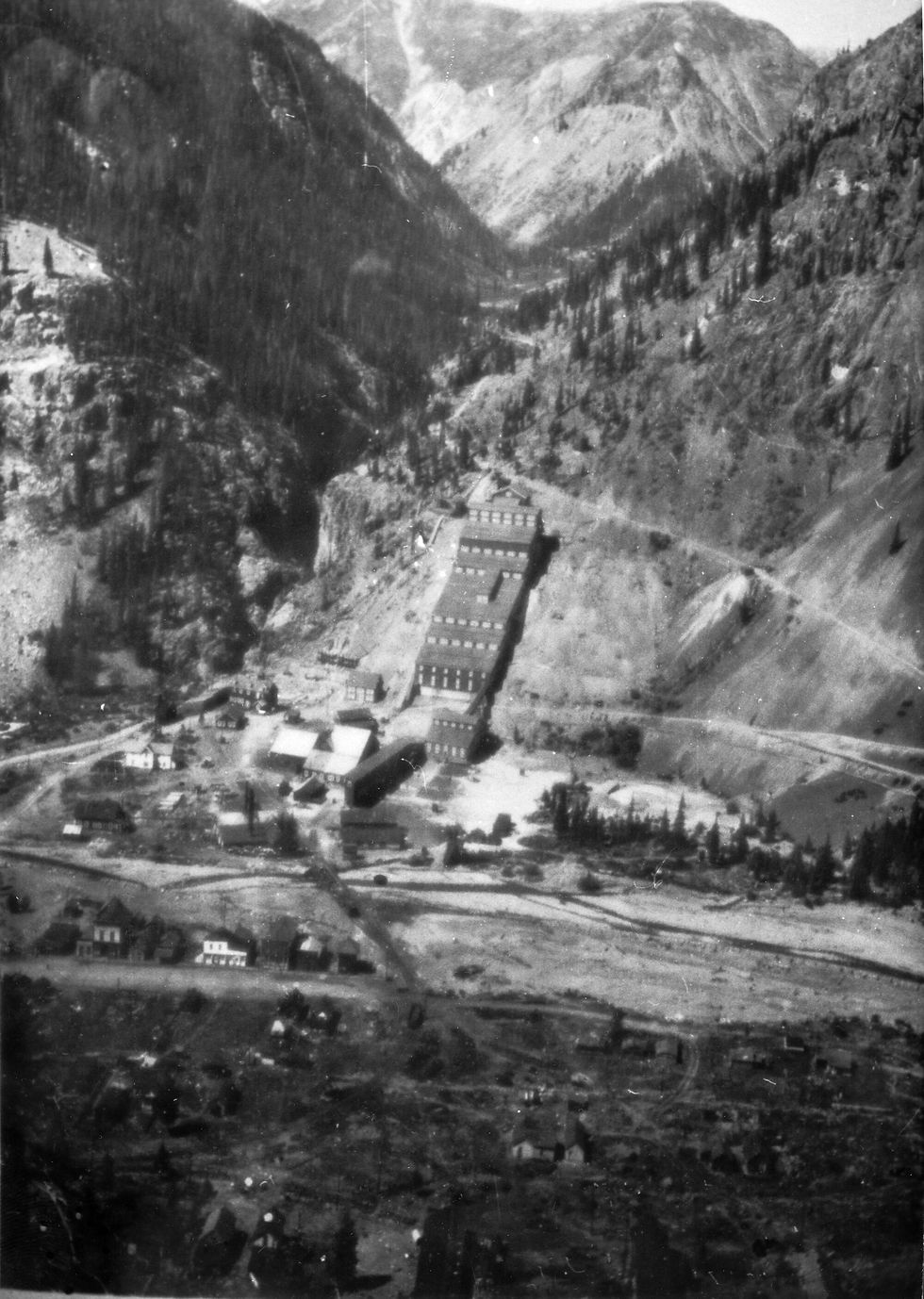
The large Sunnyside mill was constructed at Eureka in 1899 to service the nearby mine. It became the dominant industrial structure overlooking the community.
At Eureka’s height, there were:
· Homes
· Businesses
· Railroad facilities
· Mine structures
· Mill buildings
· Families
· Workers
Innovation
The Sunnyside didn’t depend upon the same primitive mining and milling methods. Mine and ore-processing technologies evolved dramatically.
Historical sources credit the Sunnyside operation with becoming an important site in the development of selective flotation, a process that improved the separation of complex lead-zinc ores.
The first prospectors tried pans and sluices. Decades later, engineers were using the latest sophisticated ore-processing technology of their era.
They kept finding new ways to find value in the same mountains.
THE PEOPLE
By Eureka’s peak years, people were finding more than mineral wealth. Many found employment in the mill, support service companies, and other established businesses. They built homes and became a part of the community. They married and raised families here and sent their children to school here.
While the prospectors found gold and the miners found work. For many families, Eureka's value was no longer only what came out of the mountain. It was the work, community, and home they built around it.
WHAT IT DID FOR THE SURROUNDING REGION
Eureka occupied an important position along the upper Animas Mining corridor and the railroad reinforced the connections between the community in the valley.
Silverton—Howardsville—Eureka—Animas Forks
The town functioned as both, a residential community and an industrial center serving major mining activity.
THE TURNING POINT
The Sunnyside operation largely collapsed in 1939. Although the mill briefly operated again, its final shutdown came soon afterward. Eureka's post office closed in 1942, and the community rapidly faded.
The community that had developed after the original discovery largely disappeared.
Was Eureka actually finished?
OUR VISIT
The road in was a beautiful drive through the Animas River valley. Tall spruce dotted the slopes leading to the banks of the Animas River to our right and meadows with mountain grasses on the left. Eureka lies about eight miles up County Road 2 from Silverton.
As we approached where the town had once stood, we’re greeted with a modern sign stating: Eureka Campground and Store.

The area is compact where the townsite was and to the south, the prominent remnants of Sunnyside Mill still hug the mountain. It shows me just how much the mill dominated over the closely-situated town. I can imagine the peaceful place I’m standing in today, being once filled with the sounds of clanging iron, screeching of pulleys, and shouts of workers as an everyday occurrence in Eureka.
Current Photo Courtesy of: Eureka Campground (Used with permission)
The former townsite is where the campground sits today. It makes for the perfect placement of campsites on the predominantly flat area. They have preserved the former water tank used by the railroad with Interpretive Markers explaining the history of where campers or visitors are standing.
WHAT REMAINS TODAY
The landscape changed dramatically after the town disappeared. Many of Eureka’s historic buildings vanished. Mill foundations and other reminders remain.
But something fascinating happened
Today the historic townsite is the Eureka Campground, with RV and tent sites, electric hookups at some sites, group camping, a rustic cabin, and even a camp store.
Each generation found a new reason—and a new way—to reach Eureka, and a new reason to enjoy it.
The contrast is remarkable.
1860 – Prospectors struggled into the San Juans Looking for gold.
1880s – Wagons followed roads into Eureka.
1896 – Trains arrived.
Today – Trucks, Jeeps, motorhomes and RV trailers arrive.
Ironically, the day we were there, a few people were panning for gold in the small river next to the remnants of the mill. They had come in their modern vehicles.
When I asked if they were getting rich.
They answered, “not yet.”
A few people still come to pan for gold, because it’s fun. And maybe, with the hope they’ll find something valuable.
Most people who come to Eureka to camp, do so because they value what Eureka has to offer this generation: the mountains themselves.
WHAT SURPRISED ME MOST?
What could have become just another abandoned town along a mountain road has reinvented itself into a destination for this generation.
It didn’t feel abandoned at all.
As we drove away, several trucks pulling enormous fifth wheels were headed toward the campground. I wondered what Charles Baker—or the families who later lived here—would think of them. Some of those RVs were probably larger than the cabins Eureka's residents once called home.
Jeeps and other OHVs passed us heading toward the Alpine Loop, where travelers climb toward Engineer or Cinnamon Pass and eventually Lake City.
This is no ghost town.
This is an area used by many to come spend a few days relaxing and enjoying the beauty of the area. To many, it’s used as a basecamp for their daily ventures into the many opportunities close to Eureka to explore the mountains in the area.
While I expected a more forgotten place, I was actually happy to see that Eureka wasn’t just an abandoned spot on the side of the road.
It’s a place that has once again brought people into the mountains, this time for a different reason.
Photos Courtesy of Eureka Campground - Used with permission
BEFORE YOU GO
Location: Eureka is northeast of Silverton along San Juan County Road 2.
Elevation: Roughly 9,860 feet
Road / Access: County Road 2 – paved leaving Silverton, becoming a generally graded gravel road to Eureka. The road beyond Eureka becomes more demanding. Follow advice on markers as you toward Alpine Loop destinations.
Recommended Vehicle: A Jeep or truck is more than adequate under ordinary dry summer conditions for Eureka itself; conditions farther into the high country can change considerably
Walking Difficulty: Generally easy in the historic townsite/campground
Best season: Generally mid- to late summer into early fall, depending on snow and road conditions.
Cell Service: Map your route before leaving; service may be unreliable.
Private property: Respect all posted boundaries, restrictions and environmental restoration areas.
Weather Concerns: Mountain weather can change quickly; check current conditions before leaving.
Mine / Structure hazards: Do not enter mine openings or climb on unstable historic structures
Preservation: Do not remove artifacts or objects from historic sites
Take only pictures. Leave only footprints.
THEN & NOW
WHAT DID EUREKA LEAVE BEHIND?
Perhaps Eureka left more than mill ruins, foundations, and a flat place for a campground.
The first prospectors came looking for something valuable hidden in the mountains.
Generations afterward, people continue coming to Eureka and finding something worth the journey.
What they value has changed.
The place continues to offer something to people willing to come to it.
THE QUESTION IT LEFT ME
Our Original question:
What does it mean to be first if the real story comes years later?
Perhaps being first gave Eureka its place in history. What came afterward gave it its story.
Eureka leaves me with another question:
What does Eureka have in store for the next generation?
Eureka has always lived up to its name.
What people come here hoping to find has simply changed.
Eureka began with the San Juans' first documented gold discovery, but every generation since has found something different there worth the journey.
The rugged landscape that once made Eureka so difficult to reach is now one of the reasons people come.
After reading its history and visiting here, perhaps Eureka’s story isn’t finished yet.
This town has shown it has the ability to reinvent itself when needed.
I wouldn’t be surprised if it does so for the next generation.
LEARN MORE
Excellent overview of the town, Sunnyside, railroad, population and historical photographs.
Especially useful for Baker's 1860 expedition and the difficult beginnings of San Juan mining.
Useful independent confirmation of Charles Baker's 1860 San Juan gold discovery.
Particularly useful because it places Baker's placer discovery specifically near the site of Eureka.
PREVIOUS STOP: HOWARDSVILLE
NEXT STOP: ANIMAS FORKS
What did it take to call a place home when winter could cut it off from the rest of the world?

Thank you for reading.
May God abundantly bless you and may He always keep you.


Comments