

Colorado's Abandoned Towns Howardsville Ghost Town

Updated: Oct 27
Site Visit Date: September 4, 2026
Colorado's Abandoned Towns -- Better Known as Ghost Towns.
Today's Town: Howardsville
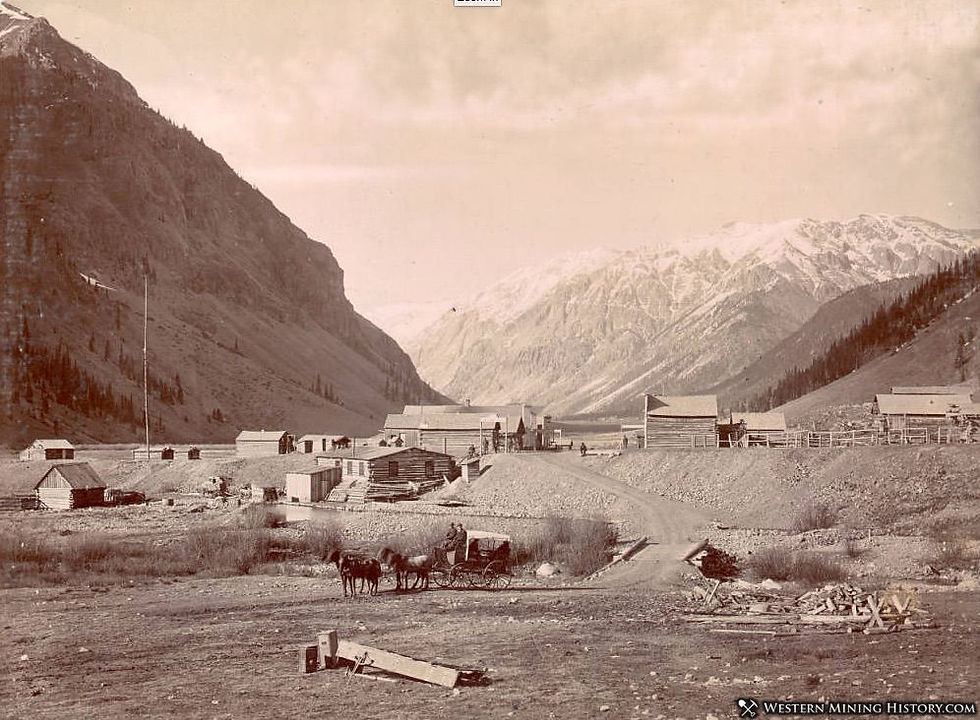
Howardsville is a mining settlement about four miles northeast of Silverton in the beautiful Animas River Valley. At first glance, it looks far too modest to have once mattered politically to a large portion of southwestern Colorado.
Today is Friday, September 4, 2026, the beginning of Labor Day weekend.
My husband, our dog, Harley and I are in our Jeep and are climbing higher into the San Juan Mountains to see what remains of the ghost town of Howardsville. Once again, our trip takes us south on US Hwy 550 to Silverton where we’ll head east to find the town that was first in the region and named county seat, until Silverton came along and quickly took the title away.
We’re here to see what remains and perhaps answer our guiding question:
What happens when a town is first, but not the town that survives?
HISTORY OF HOWARDSVILLE
George W. Howard who was prospecting in the area built the first cabin in Howardsville in 1873. An organized settlement developed in 1874 when the post office was established—one of the first post offices in San Juan Mountains. The community was never formally incorporated and an earlier name, Bullion City also appears in historical records.
The Brunot Agreement was negotiated in 1873 and ratified in April 1874, opening roughly four million acres of Ute land in the San Juan region to mining and settlement. The effect was immediate. A USGS history estimates about 2,000 miners entered the district that summer.
At roughly 9,700-9,750 feet above sea level, the relatively flat area at the junction of Cunningham Creek and the Animas River was close to rich early gold-and-silver prospects and routes into the Cunningham and Arrastra gulches.
Its location proved beneficial in supporting silver and gold mining in the area and served as a supply, transportation and processing center for nearby mines and camps in the upper Animas and Cunningham Gulch areas. The several nearby mines included Little Giant, Green Mountain, Pride of the West, Little Nation, Old Hundred area, and numerous Cunningham/Arrastra Gulch workings.
No reliable peak population figures can be found. The town was important early, but was never one of the largest San Juan camps.
THE BOOM YEARS
Peak period for Howardsville was in the mid-1870s. Howardsville’s moment as the center of government was very short-lived.
La Plata County, created in February, 1874, covered a huge portion of southwestern Colorado. Howardsville was selected as its first county seat. The first courthouse, a small log building, was built there.

Yet Howardsville’s moment of political importance lasted only a few months. According to the Animas Museum’s La Plata County history, voters moved the county seat to newly established Silverton during the county’s July 1874 election—only months after Howardsville had been selected.
When San Juan County was created in 1876, Silverton became its county seat—a role it still holds today.
Yet, Howardsville didn’t disappear when it lost the courthouse.
Mining kept it alive.
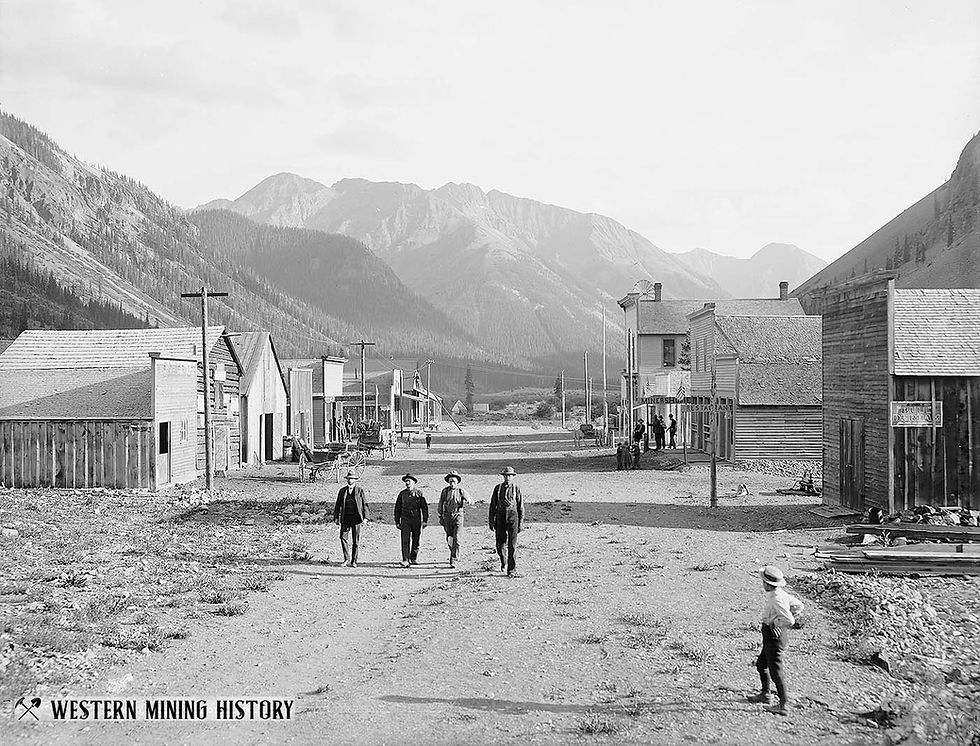
It included the now vacant courthouse, post office, store/saloon, and even an early brewery. By about 1876 it had an operating school.
Then transportation began determining which town would dominate.
The Denver & Rio Grande reached Silverton in 1882, connecting Silverton directly with Durango and its smelters. This strengthened Silverton at Howardsville’s expense.
Howardsville would eventually get rail service when Otto Mears’ Silverton Northern railroad reached Howardsville and the upper Animas corridor in 1896.
Later, in 1905 a 1.3-mile Green Mountain Branch was built from Howardsville into Cunningham Gulch to serve the Old Hundred and Green Mountain mines.

THE PEOPLE
A family visitor becomes a lifelong and prominent resident.
Henry Forsyth came from Massachusetts to Howardsville in 1880 to visit his brother and stayed.
Forsyth served as Howardsville’s postmaster beginning in 1898 and remained associated with the office until in closed in 1939. During the fifteen years he served as county commissioner, his daughter was nominally postmistress while he served as assistant postmaster.
Mr. Forsyth lived in the old courthouse after the government had moved away. When he and his partner left on prospecting trips, they didn’t bother locking the building or hiding their valuables.
Exactly what I’d expect in a small close-knit community.
WHAT HOWARDSVILLE DID FOR THE SURROUNDING REGION
For a few months in 1874, people came to Howardsville not merely to prospect but to conduct county business. After the political center moved away, Howardsville continued to support surrounding mines through transportation, milling, freight and services.
THE TURNING POINT
Howardsville held on through all the things that worked against it. Its decline came in stages.
In 1874, the political loss decreased the town’s importance when the county seat moved to Silverton.
Another blow came in 1882 when the Denver & Rio Grande reached Silverton increasing Silverton’s transportation advantage.
In 1939 the post office closed and Silverton Northern operations ended.
The remaining Silverton Northern rails were removed for scrap in 1942.
Mining wound down further when the Little Nation Mine ceased operations in 1953.
In 1954 the historic log cabin courthouse burned down.
Today, there are modern buildings in Howardsville. While it isn’t incorporated, people still have homes here.
There is still life in Howardsville.
The Little Nation Mill
In 1923, the Little Nation Mining Company completed a mill and aerial tramway in Howardsville to serve its mine on King Solomon Mountain. The 2,900-foot aerial tramway carried ore down to the mill. It was designed to process about 50 tons per day with only one operator and one helper.

Ironically, the mill itself operated only briefly because mine development had lagged behind mill construction. By the 1940s the mill was obsolete, but the tram continued transporting ore to the site for shipment elsewhere. The Little Nation Mine finally closed in 1953.
The San Juan County Historical Society acquired the mill property and undertook preservation work beginning in 2008; the mill had already been placed on the San Juan County Historic Register in 2007.
In 1874, Howardsville's defining building was its log courthouse. Today, its defining building is a mill.
OUR VISIT
THE ROAD IN
Because it’s Labor Day weekend, the annual Four Corners Motorcycle Rally is being held in Durango, Colorado about 45 miles south of Silverton. The rally hosts a poker run with several designated stops, including one in Silverton.
The number of motorcycles riding the famed Million Dollar Highway forms long lines heading toward Silverton. Once in the small town of Silverton, whole blocks were cordoned off designated as motorcycle parking.
We drive through Silverton then turn onto County Road 2 toward the upper Animas River Valley. The road is paved for about two miles then turns into a graded gravel road with the Animas River running beside it. It’s not long before the valley gives us a glimpse into why people would want to be here.
Steep, wooded mountain slopes meet the bank of the river to our right, while meadows flank the left side of the road. It’s peaceful and serene.
Periodically, ruins surrounded by lush spruce dotted the mountainside as well as the instantly recognizable orange-brown colored piles of tailings. All reminders of the rich mining history of this area. It’s also a reminder of how harsh their working environments were. On this nice September day, it’s hard to imagine these places in the peak of winter with gusty winds and blinding blizzards.
What is perhaps a railroad grade along the river can be seen for a brief moment. It appears nature has recaptured most of what was once hers.
FIRST IMPRESSION
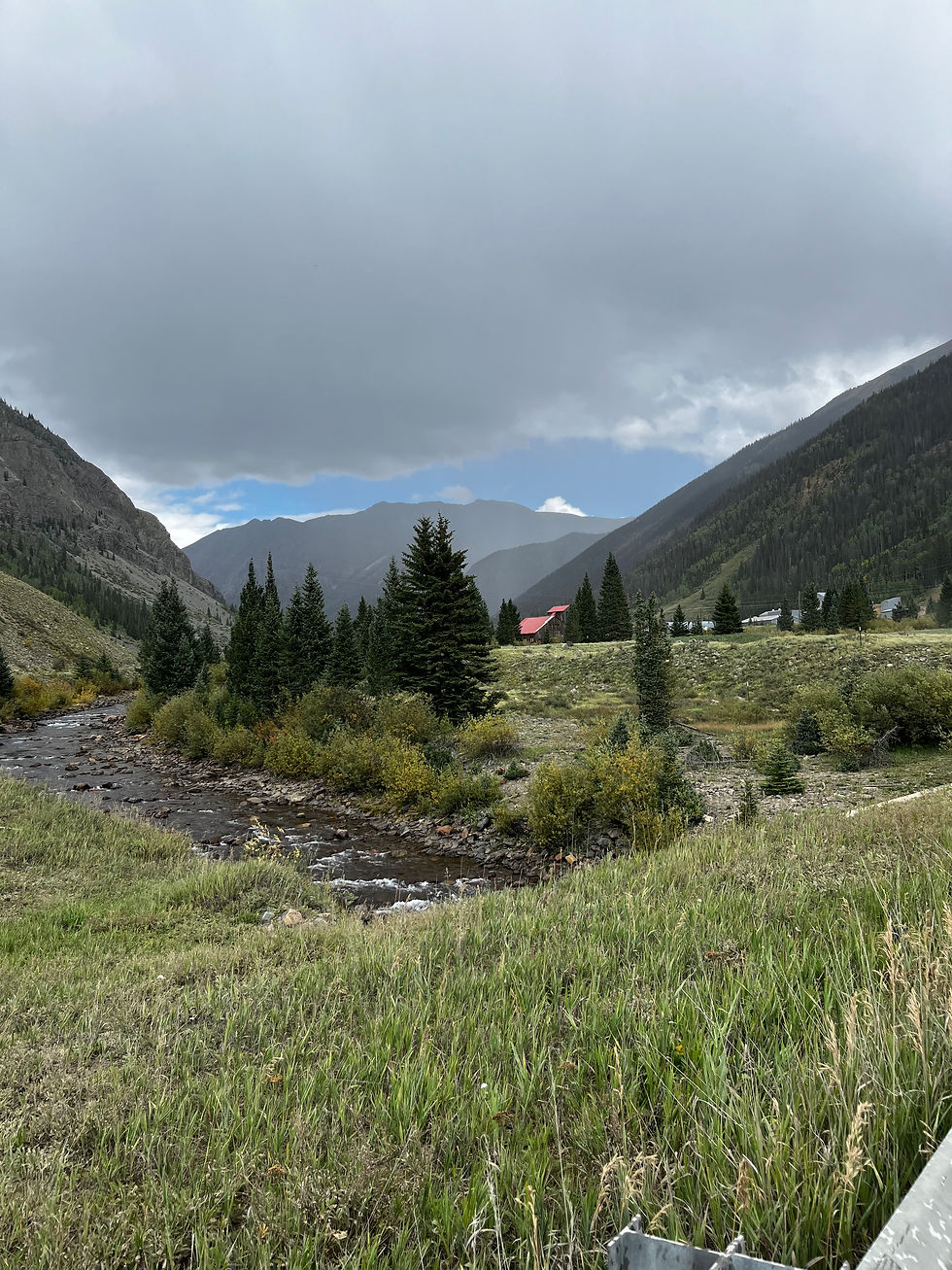
Before long the town appears in the distance. Sooner than I imagined given how primitive the town was described in the research documentation. Yet, it didn’t feel primitive. It appeared as a small settlement nestled between the Animas Rivers and Cunningham Creek and surrounded by the mountains.
WHAT REMAINS TODAY
The Little Nation Mill and Tram building—also identified locally as the Little Nation Tram House—is easily recognizable as we approach town. Ore once traveled down the aerial tram to this site for processing.
It stands tall in a meadow close to the entrance to town and can be seen from the distance welcoming visitors long before we reach Howardsville. Its red roof and weathered walls are an instant reminder of why this town came to life.

Clouds are threatening as we enter Howardsville and a few drops fall, but not so much to deter me from my mission—to see the town or what’s left. The warmth of the day soon gives way to cooler temperatures while a cloudy mist hangs over King Solomon Mountain and into Cunningham Gulch.
WHAT SURPRISED ME MOST?
That the town didn’t feel abandoned at all.
With its modern structures here, it felt alive. Not bustling or thriving, simply existing where time can stand still and no one questions why.
It’s as though the town should be renamed: The settlement that refused to be abandoned.
I believe having a summer cabin here would be a wonderful place to do all the outdoor things we love to do. I imagine the solitude of lazy days writing stories and enjoying a cup of coffee in the cool crisp morning on a porch facing King Solomon Mountain and taking in the amazing views in every other direction.
Of course, I may not have those same fantasies in the winter when temperatures drop and a snow-packed driveway needs shoveling.
BEFORE YOU GO
Location: Upper Animas River Valley, San Juan County, along County Road 2 approximately 4 miles beyond Silverton.
Elevation: Approximately 9,747 feet
Road / Access: County Road 2 – paved leaving Silverton, becoming a generally graded gravel road before Howardsville.
Recommended Vehicle: A Jeep or truck is more than adequate under ordinary dry summer conditions for Howardsville itself; conditions farther into the high country can change considerably
Walking Difficulty: Generally easy around roadside areas, but historic/mining terrain may be uneven.
Best season: Generally mid- to late summer into early fall, depending on snow and road conditions.
Cell Service: Do not count on reliable service.
Private property: Particularly important here because historic parcels, mining claims, and recreational cabins can be privately owned. Respect all posted boundaries, restrictions and environmental restoration areas.
Weather Concerns: Mountain weather can change quickly; check current conditions before leaving.
Mine / Structure hazards: Do not enter mine openings or climb on unstable historic structures
Preservation: Do not remove artifacts or objects from historic sites
Take only pictures. Leave only footprints.
THEN & NOW
WHAT DID HOWARDSVILLE LEAVE BEHIND?
Physically: the Little Nation Mill, historic structures, mining remnants, railroad grades and the altered landscape.
Historically: something more unusual.
Howardsville left behind the story of a town that got there first—but did not become the place history chose to keep.
Silverton accumulated the advantages Howardsville had lost—county seat status, population, commerce and direct railroad service.
Howardsville didn't vanish overnight. It simply became less necessary.
And that makes the ruins almost secondary.
THE QUESTION IT LEFT ME
Howardsville leaves me with our original question:
What happens when a town is first—but not the town that survives?
The courthouse is gone. The railroad is gone. Most of the mining is gone.
Yet people still live here, roads still lead through it, and the Little Nation Mill still stands.
Howardsville may not have become the town history chose, but more than 150 years later, it still refuses to be abandoned.
LEARN MORE
PREVIOUS STOP: SNEFFELS
NEXT STOP: EUREKA
What does it mean to be first if the real story comes years later?
Thank you for reading.
May God abundantly bless you and may He always keep you.


Comments