

Colorado's Abandoned Towns Capitol City - The Ghost Town With Capital-Sized Dreams

Updated: Oct 27
Site Visit Date: October 9, 2026
Colorado's Abandoned Towns -- Better Known as Ghost Towns.
Today's Town: Capitol City

My husband, Harley, our dog, and I hopped in our Jeep and drove to Lake City to explore the historic mining town of Capitol City. After enjoying a BBQ lunch in Lake City, we drove on County Road 20 along Henson Creek to find Capitol City and answer its guiding question.
How much of a town’s history is built from what actually happened,
and how much from what people hoped would happen?
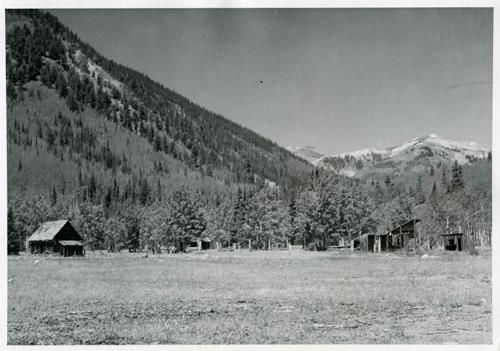
Capitol City is roughly nine to ten miles west of Lake City near the junction of Henson Creek and its North Fork. Historic accounts described the site as a broad or beautiful mountain park surrounded by mineral-rich San Juan Peaks.
HISTORY OF CAPITOL CITY
Historic accounts place the beginnings of Galena City later changed to Capitol City, in late 1876 and early 1877. It is located in Hinsdale County at an elevation of roughly 9480-9700 feet.
A
The town was part of the Galena Mining District, producing principal ores which included silver, lead, and gold. The broader district also produced zinc and other metals.
The post office came to the town May 18, 1877 and later closed on October 30, 1920.
The townsite is approximately 200 acres. Estimates of Capitol City’s peak population vary widely. Local histories often place it at several hundred—and sometimes as high as 800—although surviving census figures do not document a population that large.

Before it was a Ghost Town
The broader mining story began before Capitol City itself.
Mineral discoveries around Lake City accelerated during the early 1870s. The Ute and Ulay deposits were discovered in 1871, and additional discoveries brought increasing numbers of prospectors into what became the Galena/Henson Creek Mining district.
By 1876 the Lake City region was experiencing its first substantial mining boom.
By 1880, there were numerous mines and claims being developed throughout the district. The Town of Lake City also notes that mining continued in the Galena District into the twentieth century, though production declined substantially after about 1904.
Transportation was difficult. Investors constructed the Henson Creek and Uncompahgre Toll Road to connect Lake City with mineral deposits farther up Henson Creek. Because the canyon road made hauling large quantities of untreated ore difficult and expensive, mills and reduction works were often constructed relatively close to the mines.
Capitol City occupied a strategic point within this active mining district.
George B. Green began an early smelter venture here, but the enterprise became involved in financial problems and litigation. An 1880 newspaper account accused Green of taking about $14,000 from local residents before leaving town, describing the loss as a severe setback for the young mining community.
The Boom Years
George S. Lee arrives in Capitol City and the story changes. He became the central personality associated with Capitol City. He was more than a prospector, he invested in the town with the following businesses: smelting works, sawmills, lumber yards, the Rose Lime Kiln, and other mining and industrial investments.
Reportedly, Lee estimated that his various businesses employed more than 115 men, making him one of Hinsdale County’s significant employers.
Lee constructed the Lee Smelter near the lower edge of Capitol City around 1878 and later became involved with the Henson Creek Reduction Works at the upper end of the settlement. Both apparently operated intermittently, in part because sufficient ore was difficult to secure economically.
Lee’s two smelters at this site represents Lee’s attempt to make Capitol City an industrial center rather than merely a settlement next to mines.
He also actively promoted development of the town. In 1878, Lee offered to finance patenting the townsite, with reimbursement expected from subsequent lot sales. He was elected one of Capitol City’s five trustees in 1879 and again in 1880, and briefly served as postmaster in 1881-82.
Lee and others planned Capitol City on a remarkably ambitious scale. The townsite encompassed roughly 200 acres, far more land than a temporary collection of miners’ cabins would require.
During its active years it reportedly contained: hotels, restaurants, saloons, houses, a post office, a schoolhouse, a sawmill, smelting operations, and associated mining facilities.
Unlike many rough mining settlements, Capitol City, contained a noticeable amount of brick construction, reflecting Lee’s investments and expectation for a permanent future.
This town wasn’t being built merely as a camp. Someone expected it to last.
Lee and his wife, Mary Jane Hiserodt Lee, completed an elaborate residence at Capitol City around 1879. The National Register documentation describes the house as having a spacious veranda, a formal parlor with bay window, a library wing, possibly a glass conservatory, a small ballroom, landscaped grounds, unusually elaborate outbuildings, even a gabled brick outhouse.


The Lees also opened the house to travelers as the Mountain House Hotel. Colorado Governor Frederick W. Pitkin was among their guests in 1879. Travel writer Frank Fossett visited in 1880 and expressed surprise at encountering such an elegant residence in the remote San Juan Mountains.
Local histories say the bricks cost as much as a dollar apiece after being hauled into the mountains.
The story repeated for generations says George Lee envisioned his mountain town replacing Denver as Colorado’s capital and himself occupying the governor’s office.
Whether Lee ever seriously pursued that dream is less certain. What the historical record does show is a man willing to invest extraordinary amounts of money and effort in making Capitol City far more than an ordinary mining camp.
Reportedly, another explanation for the town’s name may be that it was named for nearby Capitol Mountain, whose shape was thought to resemble a capitol dome.
The visionary Lee became an early adopter of telephone technology. By 1881, his Capitol City residence was connected by telephone with Lake City and neighboring communities.
THE PEOPLE
The people of Capitol City made the establishment more than a mining town, they made it a community.
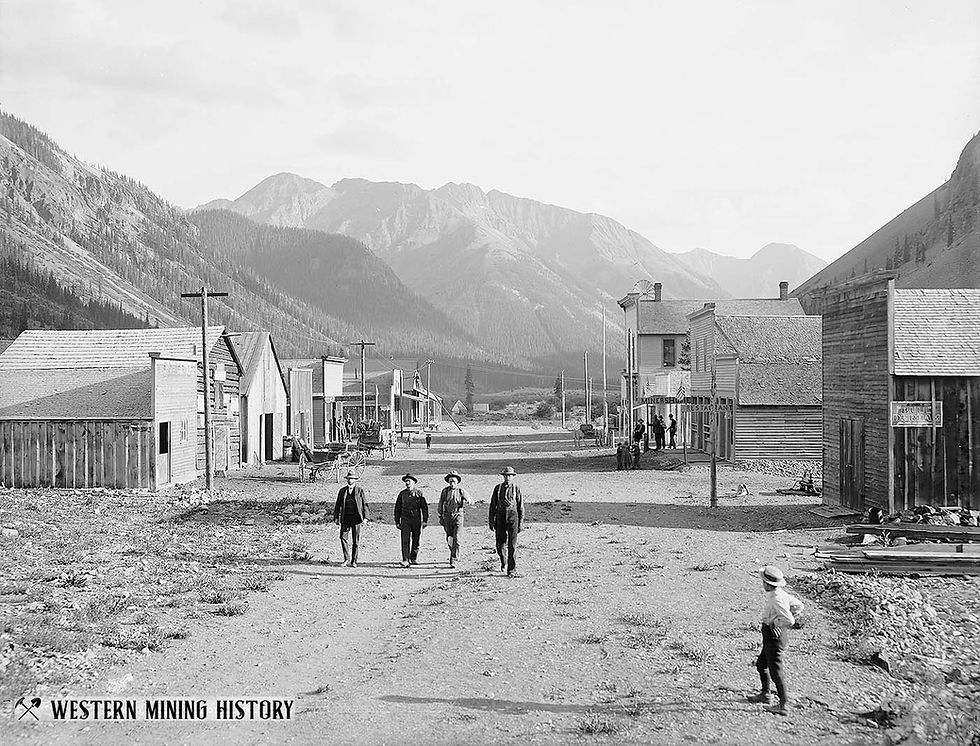
Residents had access at various times to, hotels, restaurants, saloons, a school, a post office, stores and services associated with mining, stage or freight connections with Lake City, telephone communications, and social gatherings at the Lee residence.
An 1880 newspaper account conveys, residents had a desire to recreate the comforts of the lives they had left behind while seeking the opportunity offered in the mountains.
In June 1881, residents participated in a telephone concert linking Lake City, Capitol City, Ouray, and Silverton. Vocal and instrumental performances were transmitted through the system, and Mary Jane Lee reportedly joined a singer in Lake City for a duet while sitting in her Capitol City parlor.
It seems a stretch of the imagination for people sitting in an elegant mountain parlor at nearly 10,000 feet to be able to listen to music arriving over a telephone line in 1881 and actually participating in a duet at the same time.
In 1877, Colorado voters considered a statewide referendum extending voting rights to women. Statewide, it failed decisively: 6,612 voted in favor while 14,053 against. Hinsdale County as a whole also opposed it.
A January 1880 edition of the Colorado Daily Chieftain reproduced by Western Mining History discussed a few Capitol City residents and their contributions to the town.
This article documents that women were running businesses in the town. Specifically named was Mrs. Flora, the landlady of one of the hotels in town, the Garbutt House and one of the most popular in the San Juans, was noted for her “good nature and always setting a square meal.”
The article goes on to say that Mrs. Whitaker, an equally popular landlady is running the hotel while Mrs. Flora and her daughter, Maggie are visiting friends in the east.
There was a grocery store in the town run by the Callaway Brothers. The article stated their store carried a large stock of groceries and general merchandise and were very popular young men in the town.
Other merchants in town, Frank Silence and Bill Taylor, are said to carry quite a stock of miner’s supplies.
The article discusses the Lee’s home, but it also discusses other people investing in more substantial and comfortable dwellings. These homes were not simply temporary miners’ cabins. Perhaps, Lee’s dream for Capitol City had encouraged others to trust the town for their future as well.
The same newspaper in 1880 reported that Capitol City had supported women’s suffrage in the 1877 election by a majority of three votes.
Susan B. Anthony actually visited nearby Lake City in September 1877 and spoke to such a large crowd that the meeting was moved outside the courthouse.
WHAT CAPITOL CITY DID FOR THE SURROUNDING REGION
Capitol City mattered because it sat along the route connecting Lake City with the mineral-rich upper Henson Creek country and ultimately Engineer Pass.
The Henson Creek and Uncompahgre Toll Road was essential to transporting people, freight, and ore through the district.
A short distance into the mountains, freight routes continued toward mining settlements and workings around Engineer Pass, Mineral Point, and the western San Juans.
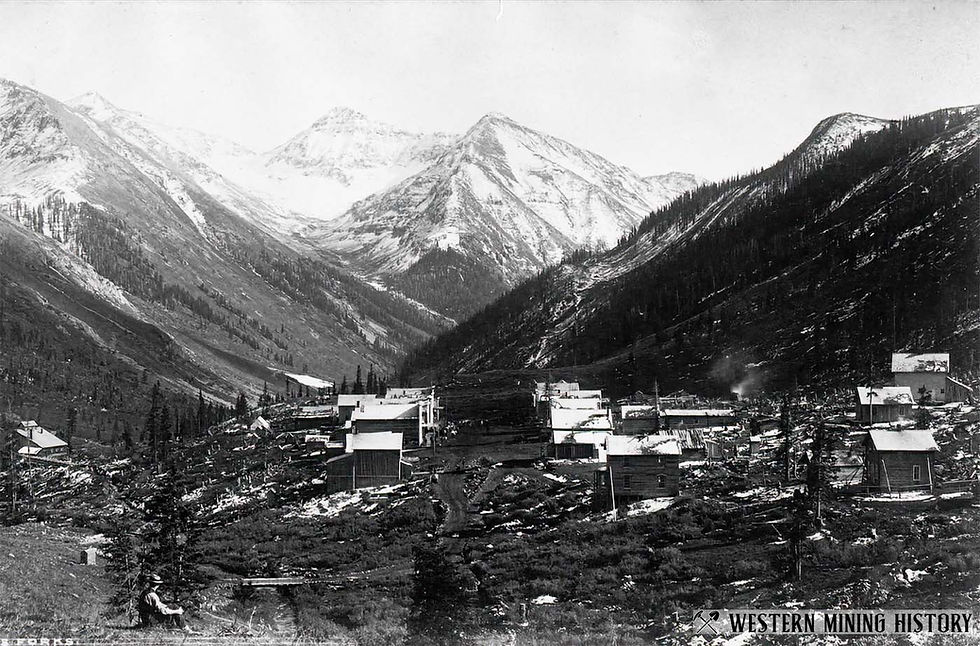
Lee’s sawmills supplied timber, lath, and shingles for buildings in Capitol City, Lake City Mineral Point, and Animas Forks. His smelting ventures attempted to process local mined ores.
Capitol City’s location made it both:
A mining settlement and a waypoint into a much larger mining landscape.
THE TURNING POINT
Unlike some of the ghost towns we’ve explored, Capitol City did not disappear because of one single event.
Several forces accumulated:
Mining economics: ore bodies and processing ventures did not always produce the returns investors expected.
Transportation: hauling ore and supplies through steep mountain terrain remained expensive.
Business failures and litigation: the early smelting operation became entangled in financial and legal trouble.
The first serious blow came well before the Silver Crash of 1893. By 1882, Lee’s business investments had become financially unsustainable. His smelter was sold at a sheriff’s sale in March, and by August, George and Mary Jane Lee sold their Hinsdale County holdings and moved to Denver. The town continued, but the man who had invested so heavily in its future was gone.
Later gold discoveries provided some renewed activity, but not enough to restore Capitol City’s earlier expectations.
Mining in the surrounding district continued long after the town’s peak, which explains why the community faded rather than abruptly vanished.
THE LAST YEARS
Last resident documentation is scarce, but there were families living in Capitol City during the early twentieth century.
The post office remained open until 1920.
The Colorado Educational Directory for 1914-1915 lists Capitol City School District No. 2, identifying Mrs. Margaret B. Witherite as the school board secretary and Marian Hoffman as a teacher.

The Denver Public Library’s historical school census records identify children from the Witherite family attending school in Capitol City during the early twentieth century.

Colorado’s 1920 yearbook still listed Capitol City among Hinsdale County’s mountain mining camps.
By the following decade, however, the settlement had effectively passed into ghost-town status.
The Lee mansion survived long after the Lees were gone but gradually deteriorated.
History Colorado has a 1961 photograph of the ruined Lee Mansion showing two walls still standing.
Eventually the remaining walls collapsed, leaving little trace of what had once been one of the most elaborate houses in the San Juans.
OUR VISIT
Our drive from Lake City takes us on Henson Creek Road/County Road 20 west and is part of the Alpine Loop National Back Country Byway. Capitol City sits roughly nine miles from Lake City and is along the eastern approach to Engineer Pass.
The road is rocky and often used by OHVs, Jeeps, and even 2WD vehicles along the section to Capitol City.
Henson Creek flows along the left side of the road as we drive toward the townsite with treed mountain slopes beyond the creek. On the right, in many areas, are steep rock formations, forested areas, as well as, a few open clearings.
We pass through Ute Ulay, another historic mining town on the way to Capitol City. A nice surprise.
Of course, we stop and explore it as well. It will be the featured city in next week’s post.
The remainder of the drive is filled with breathtaking views of mountain slopes sporting emerald green spruce trees and the orange-gold of changing leaves on the stands of aspens. The rushing river views are equally spectacular.
We arrive at the first townsite sign, but it’s a while before we spot the post office building.

The second townsite sign is several yards past the post office. I’m amazed by the large distance between the signs.

Today, it’s sixty-four degrees. We’re under partly cloudy skies and endure a few raindrops as we stop to explore the post office.
While there are open meadows, many locations are private residences. I’m surprised to find the original post office, a restored building along the road, between two private residences.
Behind the restored post office stands a smaller, deteriorating log building identified in one historical travel account as a bunkhouse for horseback mail carriers. The account describes remnants of sleeping bunks and a small desk inside, suggesting a place where carriers could rest during their journeys through the Henson Creek valley.
My research suggested that Lee’s Smelter Stack remains, however, I’m unable to locate it.
There are no identifying markers for where Lee’s Mansion stood. Looking at the historic photos and the background mountains, I guessed at possible locations.
ross from the post office is an open meadow that may have possibly held many buildings during Capitol City’s golden age. Unfortunately, there are not many documented photos of the town during its booming period.
WHAT SURPRISED ME MOST?
The size of the townsite.
While it’s difficult to imagine what the actual city would have looked like because of the various private residences that currently occupy much of the land where the town sat.
The distance between the welcome sign as we entered from Lake City on the side and the west sign at the Engineer Pass side leaves a lot of land and space between.
Yes, the area is larger than the other mining towns I’ve visited, but unlike the legends surrounding Lee, I could NOT imagine this remote location as a state capital.
While the grandiose ambition of the founder, the rugged mining realities, and the final collapse of Capitol City would not be described as idyllic.
I believe the location is.
The magnificence of the surrounding mountain views, the beauty of Henson Creek flowing through the site, and the trees on the mountain slopes make for a peaceful, serene setting that drew me to sit on a rock next to the post office and take in the surroundings.
I left feeling a bit more relaxed than when I arrived.
BEFORE YOU GO
Location: Approximately 9 miles west of Lake City on Henson Creek/County Road 20.
Elevation: About 9,500
Road / Access: County Road 20 is a rocky unpaved road. Road conditions in the San Juans can change quickly. Check current Hinsdale County or Lake City road conditions before traveling beyond Lake City.
Walking Difficulty: The area near the post office is accessible from the road.
Best season: Generally mid- to late summer into early fall, depending on snow and road conditions.
Cell Service: Map your route before leaving; service may be unreliable.
Private property: Respect all posted boundaries, restrictions and environmental restoration areas. Stay of public roads/areas and obey signs.
Weather Concerns: Mountain weather can change quickly; check current conditions before leaving.
Facilities: A public restroom is available on County Road 20 near the 5-mile marker.
Mine / Structure hazards: Do not enter mine openings or climb on unstable historic structures. Be aware of changing mountain weather at high elevations.
Preservation: Do not remove artifacts or objects from historic sites
Take only pictures. Leave only footprints.
THEN & NOW
Left to Right: Lee Mansion in Capitol City, Mansion in 1950s, Mansion in 1961,
Mansion in 1970s, Possible site today, 2026
WHAT DID CAPITOL CITY LEAVE BEHIND?
Not many buildings.
A restored post office, a small building behind the post office, unlocated remnants of a smelter stack, and scattered foundations.
The interesting part of Capitol City is the unusually colorful body of local legend, evidence of substantial industrial investment, and the historical remains of an extraordinarily ambitious mountain community.
A reminder that mining towns were built not only around what people found underground, but what they imagined above it.
THE QUESTION IT LEFT ME
Capitol City leaves me with this one:
How much of a town’s history is built from what actually happened,
and how much from what people hoped would happen?
George Lee’s actions leave little doubt that he believed in Capitol City’s future.
Lee invested, he built, he promoted, he created industries, built an extraordinary residence, and participated in the town government.
But whether he genuinely expected Capitol City to become the capital of Colorado is harder to establish.
And yet…
That dream, whether genuine or just a passing statement, became part of Capitol City’s legacy.
A real community grew around a very real industry and one man’s extraordinary vision. His vision became so entwined with the place that history and legend are difficult to separate.
The irony of Capitol City’s history is evident.
Lee built for permanence. Yet, those grand brick buildings disappeared.
However, the humble wooden post office still stands.
LEARN MORE
PREVIOUS STOP: ANIMAS FORKS
NEXT STOP: UTE ULAY
Can one mine make a town, and what does the town inherit when the mine is gone?

Thank you for reading.
May God abundantly bless you and may He always keep you.


Comments